
- 1)King BillyEditor’s PickSign Up Now ↗50 Free spins
- 2)HellspinClaim Bonus ↗50 Free spins
- 3)IvibetSee Offer ↗50 Free spins
- 4)GGbetSee Offer ↗50 Free spinsJOKERFS45
- 5)V.VegasClaim Bonus ↗50 Free spins
- 6)SlotoroGrab the Offer ↗50 Free spins
- 7)IcecasinoGrab the Offer ↗50 Free spins
- 8)SlotsgemJoin Now ↗50 Free spins
- 9)VerdecasinoClaim Your Spins ↗50 Free spins
- 10)magic365Grab the Offer ↗60 Free spins









Ten Canadian promotional records are read here field by field, and the ten are gathered late, at section 25, so that everything ahead of them explains the lines before any brand carries one. One result is worth putting at the top. Seven entries set a limit on how far a withdrawal may go; across the seven there are six values only, because CAD 150 was printed at two of the entries. Those same two entries also print the same play condition. On this evidence they make the pair least open to being read against each other. Every figure below comes from project data, and a tracked line left unwritten is reported in that state, never completed from some record that resembles it.
Fixing the meaning of a no deposit bonus
Three things make up the term. Promotional value reaches an account, and no qualifying payment stands behind it; the operator names a game for it; and an obligation is printed alongside, in the same terms.
Take one record from the ten as the illustration. It awards fifty rounds. One round is priced there at CAD 0.15, so the award comes to CAD 7.50 and the pricing stops. A 50x condition is printed, with CAD 75 as the cap on a withdrawal. It names Elvis Frog Trueways as the game, credits BGaming behind it, and publishes FSBONUS50 for entry. That is King Billy, and it is a no deposit bonus by every part of the definition: nothing was paid in, the game was chosen by the operator, and the obligation sits on the page beside the award.
What the definition never includes is a figure for how much play the obligation represents. A factor is printed; the quantity for it to act on is not, neither at that record nor at any of the other nine.
Offers advertised with no play-through attached
Since the definition turns on an obligation, the claim that dismisses one belongs here rather than twenty sections later.
Some promotions are advertised with the statement that no play is required before value can be taken out. An operator choosing to publish that assertion is one thing; a line for the obligation standing unwritten is quite another.
A statement of that kind appears at none of the ten. Every one of them prints a condition: at nine the printing is a figure, and at the last it runs to sentences. So a reader meeting the phrase elsewhere is meeting a claim from outside this set, and the thing to look for is the wording on that operator’s own terms page rather than a resemblance to anything below.
The route by which rounds land in a new no deposit bonus account
Promotional value arrives as a count of rounds on a particular machine, not as money a reader may direct. Three mechanical facts hold across all ten:
- how many rounds are awarded is printed at every record, so guesswork never enters the size of an award
- six of the ten price one round, so an award can be put into dollars at six entries and at no others
- when the value is credited goes unstated at every record, leaving timing to whoever operates the site
The six priceable awards come out at CAD 19.00, at CAD 9.00, at CAD 7.50 and at CAD 15.00 three times over. Once those rounds have been used, two further lines govern matters, the obligation and the withdrawal cap, and the award itself contains neither.
The games assigned to a no deposit bonus, one by one
This is the line filled at every record without exception, which makes it the most consistent in the set. Six titles are recorded at one entry and a single game named at the other nine.
Reels, and what the spins are pointed at
Rounds go to a machine the operator picked. Savage Buffalo Spirit Megaways takes a hundred at Monro; Lady Wolf Moon Megaways takes fifty at Hellspin, Elvis Frog Trueways fifty at King Billy, Aloha King Elvis fifty at Jet4Bet, Gates of Olympus fifty at Slotoro, Le King fifty at Spinmills, Book of Dead fifty at V.Vegas; Wild West Trueways takes thirty at Slots Gallery and Panda Fortune Rush thirty at magic365; and at WinBeatz the hundred rounds stand against six documented titles.
Games described as returning small amounts at short intervals
Machines differ in how they pay out. Some return modest sums at short intervals and others hold back before returning a great deal at once, and that difference sits with the machine, not with a promotion pointed at one. Neither pattern is described at any record here, no temperament is assigned to a title, and nothing is said about how a named game behaves. The ten settle two things only: which machine takes the rounds and how many of them arrive.
The studio named against every no deposit bonus game
A maker is credited at nine records, with the studio line unwritten at the tenth. Those nine carry six distinct entries:
- BGaming, credited at Jet4Bet, at King Billy and at Monro
- Booming Games, credited at Hellspin and at Slots Gallery
- Pragmatic Play at Slotoro, Hacksaw Gaming at Spinmills, Play’n GO at V.Vegas, each standing alone
- several documented studios at WinBeatz, the record whose title line already holds six
- the line goes unwritten at magic365, where a title is printed and no maker is
Three of the nine credited records therefore name the same studio, and their terms agree on nothing else: one prints 50x, one 45x and one 40x; their limits run CAD 75 at the first, a bonus multiple at the second and CAD 150 at the third; and two of them price a round where the third does not. A credit says who built a machine and says nothing about who wrote the terms.
Why an operator bothers handing rounds out
Rounds go out, something comes back, and what comes back is no secret. The operator gains a registration, an open account, and play on terms it drafted from somebody who had not visited before.
An obligation attached to promotional value keeps it on the site a while rather than letting it leave at once, and a withdrawal cap bounds whatever does leave. Both instruments are the operator’s and both appear in wording the operator wrote. A trick is not what any of that makes a promotion. What it makes it is a two-sided transaction, and one of those sides can be inspected on the page.
Checks worth running on a no deposit bonus first
Four questions deserve settling in advance of accepting anything, and the answers come from outside these records rather than inside them.
Licence and authorisation background
Who authorised this operator to take a reader’s play, and where that authorisation appears, is the first question. The seven tracked lines carry nothing of the kind, so the checking is done at the operator, and at whatever body that operator names. Section 27 covers what a regulator does; this is the reader’s own look.
The territory a player connects from
A reader’s own province decides what is lawfully open, and a promotion appearing on some page proves nothing about that page being open there. Territory goes unmentioned at all ten.
The denomination an account is kept in
Canadian dollars are how project data record every amount quoted here. Nothing at any record says whether an account itself is held in that currency, or what a conversion would do to a printed amount.
Three checks, three answers that have to come from somewhere other than this comparison. One more belongs with them. Four lines go unwritten right across the ten, and anybody needing one of the four has the operator and nobody else to ask.
- a validity window for the award
- whatever quantity an obligation is meant to act on
- a cap on the stake a single round may carry
- a weighting for any category of game
Turning a no deposit bonus on, manually or on its own
Entry into a promotion here runs by either of two documented routes. A printed line separates them, and nothing in the award does.
A string is published at six: 30WW, BONUS50, FSBONUS50, FSBONUS100, SPM50 and UPLAY100. Four leave that line unwritten, and nothing follows from that about entry working or not working without one. How an existing string is used is governed by whatever instructions the operator issues, and none of the ten says whether a string is typed once or again, wanted before the value or after it.
- an award credited with no string involved, which is what four records leave a reader with
- an award credited after a published string goes in, which is the route the other six print
Nothing here grades either route, because the routes are a fact about publication and not about what arrives.
A no deposit bonus weighed against a deposit-matched offer
Set the two side by side and the difference is the payment, not the size.
What a deposit-matched offer requires: money transferred in first, a percentage applied to it, and promotional value scaled to whatever was paid. What the ten records here require: no payment at all, a count of rounds fixed in advance, and a machine the operator named.
The consequences diverge from there. A matched offer’s value moves with the deposit, so a reader controls it; an award of rounds does not move at all, and the count on the page is the count. A matched offer attaches its obligation to a sum the reader chose; these ten attach obligations to a quantity nobody printed. Neither arrangement is the better one in general terms, and nothing in this set would support saying so.
Shapes the award takes
Each of five arrangements prints its own combination of lines, which is the reason for separating them. The ten records below cover two of the five.
Spins tied to one named title
This is the arrangement at nine entries. One line holds a count, another holds a title, and a reader who has the first still has to go looking for the second, because neither line forecasts the other.
A credit balance in place of spins
Promotional credit written as a sum occupies the position a count would hold. The arrangement is part of the category, though no entry here demonstrates it, since ten rows report ten records and not a field. Credit aimed at a balance calls for no particular machine, which changes which lines a reader ends up reading.
Awards printed with no requirement attached
Wording of this sort declares that nothing needs playing. Section 2 took the claim already, together with the reason none of the ten makes it.
Spins released in separate batches
Rather than a single release, an allocation spread over days. No entry here documents such a schedule, though a reader may well meet one elsewhere. Two quantities would then need following, the allocation in full and the portion currently live, and no entry below prints either.
Awards held for players already registered
An open account is occasionally the target instead of a new sign-up. No entry here documents eligibility written that way, so nothing below is being called withheld, and only the operator can confirm whether one reader qualifies.
Near neighbours of the no deposit bonus, and how they differ
Confusion gathers around four neighbours, and it is the trigger that distinguishes them, never the payout:
- cashback responds to play the operator has already recorded
- a rebate responds to a figure for a period’s losses
- a referral award waits for another person to register
- a reload waits for more money to arrive
What any one operator uses as a trigger varies, so treating all four as money-first goes past the available evidence. A qualifying payment is what divides the four from this category; the size of an award never divides anything.
What a no deposit bonus demands before anything clears
Why a printed factor falls short of an amount of play takes three headings to set out.
The multiple just as the terms print it
Conditions are documented at ten records out of ten: figures at nine of them and prose at the last. Five values cover the nine: 3x once, 5x once, 40x twice, 50x twice and 45x at three entries. A figure like that, once in the terms, documents the page carrying it.
The quantity that multiple needs to act on
A factor always measures play against some second quantity. The question at a given record is therefore what the 45, or the 40, applies to, and ten records leave that unanswered. Nor can a substitute be slipped in. An award’s price, a count of rounds, a balance in the account, a return off the rounds: candidates come easily and the terms nominate none of them, which makes the handiest of them a manufactured total rather than a published one.
The point at which no further figure exists
Because the base goes unwritten at ten records, arithmetic gets as far as an award value wherever a count stands beside a price, and halts. That yields six award values. A play-through total it yields nowhere, and that is the documentation running out rather than a reading going wrong.
There may be one further restriction, separate from both the obligation and the cap, governing how much a single round is permitted to stake while a promotion lasts. No figure for that appears here either. And the condition set down in prose at one record keeps its prose form right through this article, with no numeric equivalent built for it and no place alongside the nine figures.
The shelf life of an unplayed no deposit bonus award
Ten records, ten unwritten validity lines. The statement there concerns terms, not rounds.
Keeping indefinitely is not what it means, and lapsing quickly is not what it means either. What it means is that a window is nowhere in print and the operator has to be asked for one. A published string says nothing about carrying a date of its own, and an unwritten line has no date to carry in the first place. So a deadline is the one thing this comparison cannot be planned around, because the figure a plan would need was never supplied.
Game categories and the share each contributes
Full weight for machines, a fraction or nothing for other categories: that is the usual settlement for promotional play, standard across the field, and ten records set none of it down.
Categories go unnamed, percentages unassigned, excluded game types unlisted. What a reader is left holding:
- a title the rounds attach to, printed at all ten
- zero instruction covering play sent anywhere else
- an obligation with an unwritten quantity, so no share of it can be computed either
A familiar percentage table inserted at this point would be describing the field instead of this set, and none is inserted.
Arguments that favour taking a no deposit bonus
Taken strictly from what these ten print, the format has several things going for it:
- no money of a reader’s own has to move into an account before play begins
- every entry prints its round count, settling the award’s size ahead of time
- every entry prints a title, so the machine is known from the start
- nine entries print the condition as a figure, which identifies the factor if nothing else
- seven entries print a cap on a withdrawal, against zero printing a validity window
- six entries publish a string, which is a short way in wherever one exists
Arguments on the other side of a no deposit bonus
Turn the same ten records over and the other side appears, much of it in the lines nobody filled:
- no entry prints the quantity an obligation runs against, putting an amount of play out of reach
- three entries leave the cap line unwritten, which leaves a reader without a documented bound either way
- two of the seven caps multiply quantities that appear nowhere as figures
- a round’s price goes unprinted at four entries, so an award resists valuation at those four
- validity is unprinted across the whole set of ten
- the machine belongs to the operator’s choice rather than the reader’s
Every stage between signing up and banking a no deposit bonus
A fresh browser window stands eight stages away from value cleared out of an account. Nowhere among the ten do the eight appear in sequence, so the order below was worked out from the rules and lifted from no published account.
Working out whether you qualify
Criteria for eligibility go unprinted at every record. A reader’s residency and the age that applies to them both follow from the province, and anything else that applies lives wherever the operator put it in writing.
Opening an account from scratch
Where a relationship with an operator starts is registration, and whatever gets gathered at that point attaches to the account, never to the award. Ten records name no forms, no fields and no documents for the step.
Typing a published code into the field
A string stands at six records; the line is unwritten at four. Instructions from the operator govern how an existing string is entered, and a line with nothing on it yields no conclusion about entry working in its absence.
Confirming an address or switching an account on
A confirmation step may well sit in between registration and value turning up. Whether it does is unrecorded everywhere here, so expecting one means reading operators instead of comparisons.
Using up the value that was credited
Rounds go to the named machine at whatever count is recorded. At the six records that price a round, an award carries a value; where it stands next to an obligation, the two figures keep their distance rather than combining.
Watching the requirement fall toward zero
Progress on an obligation is something the account tracks. With the quantity the factor acts on unprinted across this set, the scale of what is being cleared cannot be described, and whatever the account displays is the only figure available.
Getting past the identity check
Checks on identity are a commonplace of this field, yet a check of that sort is raised in none of these ten sets of terms. No stage is named, no document list, no duration, no outcome, and a chronology brought in from outside would set out a procedure nobody here published.
Submitting a first request to withdraw
A request runs into whatever cap has been recorded, and a cap stands at seven of the ten. Two of those seven print a multiple, five a sum in Canadian dollars; three leave the line bare, which turns it into a question for those three operators.
- the province settled
- the account opened
- the string entered wherever one is published
- the confirmation step cleared wherever one applies
- the rounds played at the named machine
- the obligation worked down
- the identity check satisfied
- the request submitted
Ways players throw a promotion away
Each of five errors follows from a state already reported above, and each dissolves once a line is read together with that state:
- an unwritten line taken for an imposed obligation, when the record of it is that nothing got printed
- fetching a base from outside, pushing it through a factor, and reporting a figure nobody published
- treating a recorded cap as value already in transit, when bounding what may leave is its whole function
- a shared string taken as proof of one owner, or one platform, behind two separate brands
- treating a studio credit as comment on who drafted those terms, or on who settled that obligation
The cap a no deposit bonus sets over any eventual withdrawal
Those five errors all turn on misreading one line, so the line itself is worth taking next, well before the records arrive.
A cap is carried at seven records, and those seven resolve into six distinct values, one of the figures appearing twice. CAD 150 stands at Jet4Bet and again at Slots Gallery. The other recorded values are CAD 75, CAD 38, CAD 8, a cap written as ten times the bonus, and a cap written as three times winnings. Three entries leave the line unwritten. That reports three terms pages and decides nothing whatever about a payout being bounded in practice.
The duplicate repays a closer look, because of how little it carries. Jet4Bet and Slots Gallery agree on the cap and agree on a 40x condition, which are the two lines quoted most readily. Then the agreement stops: one awards fifty rounds and the other thirty, and neither prints a price for a round, which leaves both awards unvalued, so the rounds cannot be weighed one against the other in money. There is no arithmetic to begin. A single figure turns up on two terms pages, and the turning up is a property of those pages rather than of whatever offers stand behind them.
The two multiple-form caps are worth separating too. Both of those two write a factor beside a quantity, and a figure needs the pair of them in print. The quantities here are the promotional value at one record and the winnings at the other, and neither is anywhere set down as a sum. Both do print a count alongside a price: Monro credits a hundred rounds and prices one at CAD 0.15, Slotoro credits fifty and prices one at CAD 0.30, and each comes to an award of CAD 15.00, an identical total reached two ways. That total prices rounds. It is not the promotional value the first cap multiplies, nor the winnings the second one multiplies, so dropping it into either position would invent a limit no operator published. Two factors, ten and three; two quantities, both unprinted; two caps resolving to nothing. Two caps, two factors, two unprinted quantities, and no figure at the end of either.
Forms the cap takes, and how many record each
| Cap form | Records recording it |
|---|---|
| A multiple of the winnings | 1 |
| A multiple of the promotional value | 1 |
| The cap line left unwritten | 3 |
| Canadian dollar sums printed once each | 3 |
| The single Canadian dollar figure appearing at two records | 2 |
Five forms account for all ten, and the closing row is the finding, standing here before any brand is profiled.
What a no deposit bonus is practically worth
A round’s price stands at six records, which puts six awards into dollars: King Billy at CAD 7.50, magic365 at CAD 9.00, then CAD 15.00 apiece at Monro, at Slotoro and at V.Vegas, and CAD 19.00 at Hellspin. At the other four the price line is unwritten and no award figure exists.
King Billy is worth walking through, since three documented figures meet at one record. The count reads fifty, the price per round CAD 0.15, and the product of the two is CAD 7.50 for the award. Beside it sit a 50x condition and a CAD 75 cap. The calculation ends at CAD 7.50: the 50x has no documented base, and the award and the cap are two printed figures with nothing recorded to join them.
What a price tells a reader, and what it does not:
- it tells them what the rounds cost the operator to hand out
- a figure for what reaches a bank account is not what it is
- it is not the quantity any obligation multiplies, at this record or at any other
- it says nothing about the cap standing beside it, in either direction
Staking limits that apply while rounds remain unplayed
A promotion may restrict the stake a single round can carry for as long as the promotion lasts. Such a restriction is ordinary in this field.
Ten records print no figure for one, and none of them describes a consequence for exceeding one. Whether any of the ten applies such a restriction is not something these pages show, and supplying a plausible number would be the point at which a reported rule stopped being reported. A reader wanting the figure has the operator to ask, and nothing below is written as though no such restriction applied.
No deposit bonus value that can be banked, and value that cannot
Two kinds of promotional value behave very differently once the rounds are finished, and the ten records speak to only part of the difference.
Value that can be banked: whatever the rounds return is treated as the reader’s, subject to the obligation and to whatever cap is recorded. Value that cannot: the promotional amount itself remains the operator’s, with only the rounds’ product ever able to leave.
Ten records state which of the two applies nowhere. It matters, because the same award read the two ways leaves a reader holding very different things, and the seven tracked lines decide between them nowhere. A recorded cap sets a bound on an amount and leaves unsaid which amount that is. The operator has to answer that, and ten records compared side by side will not answer it instead.
Ways money reaches and leaves a no deposit bonus account
A promotion of this kind starts with no payment, and a payment may still be wanted afterwards. Playing on after the rounds are spent is one reason; a condition sitting elsewhere in the terms is another; a third is a withdrawal route that wants an incoming transaction before it will work. This set documents none of the three.
Routes in and routes out go unnamed alike across the ten. Four structural points hold whatever an individual operator runs:
- how value came in forecasts nothing about how anything goes out
- an account holder and an operator settle between them which routes exist
- ten brands record no charge, no clearing time and no settlement detail
- an amount is what a cap governs, and a route is not described by one
Naming a widely circulated Canadian method for one of these brands, on no better ground than how widely it circulates, would be invention in reporter’s clothing, so no brand below has a method put against it.
Running a promotion from a handset
Rounds credited to an account are rounds in that account, whichever device opens it. The records support that much: an award attaches to an account, and to no screen.
Beyond it, these pages are silent. Applications go unnamed, so do mobile sites, so does any difference a handset makes to how a promotion runs, and so does any restriction tied to a class of device. Somebody intending to play from a phone is therefore reading an operator and not this comparison, and the seven tracked lines say nothing in either direction.
Ten no deposit bonus listings from Canada, gathered by who built the game
Twenty-four sections have explained the lines; the ten records now fill them in. Grouping follows the credited studio, with the studios holding more than one record first, then the single credits in brand order, and last the record whose studio line is unwritten. A recorded field settles the grouping, and no ranking follows from it. Three records carry the first studio credit, two carry the second, four carry a credit standing alone, and one leaves the line unwritten, which is why the order below runs as it does. Every entry reports on the seven tracked lines one by one: a value wherever the terms print one, and otherwise the state that line is in.
Jet4Bet, whose cap is recorded at CAD 150
A withdrawal here is capped at CAD 150, a figure one other entry in these ten also prints.
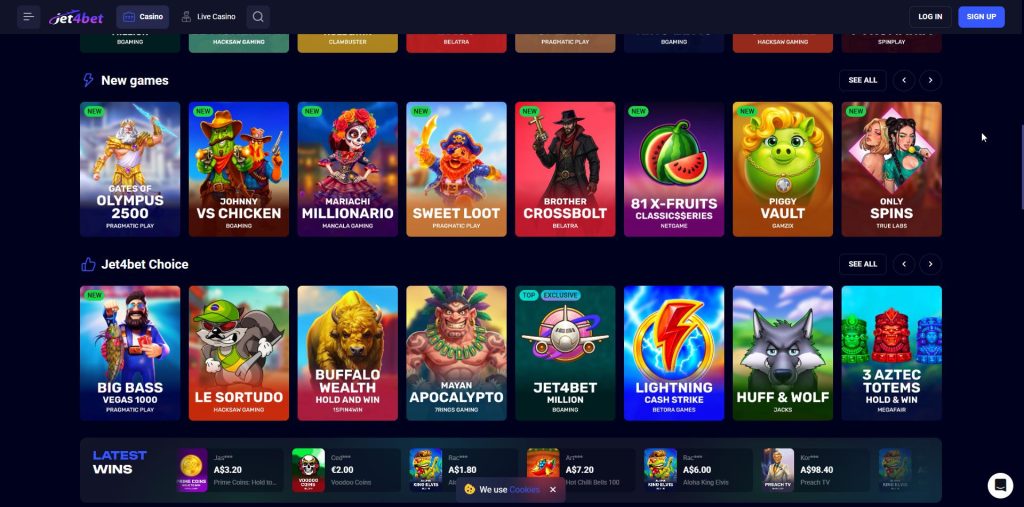
A 40x condition is printed beside it, as one further record also prints, and the count reads fifty. The rounds go to Aloha King Elvis, with BGaming credited behind that title and BONUS50 published for entry. Unwritten here is a single line, what one round costs, and without that the award will not go into dollars. That leaves six tracked lines carrying a value, and the one unwritten line is the reason this entry cannot be priced against any other.
King Billy, pricing one round at CAD 0.15
Against one round here the price set is CAD 0.15, and one further entry prints that same figure.
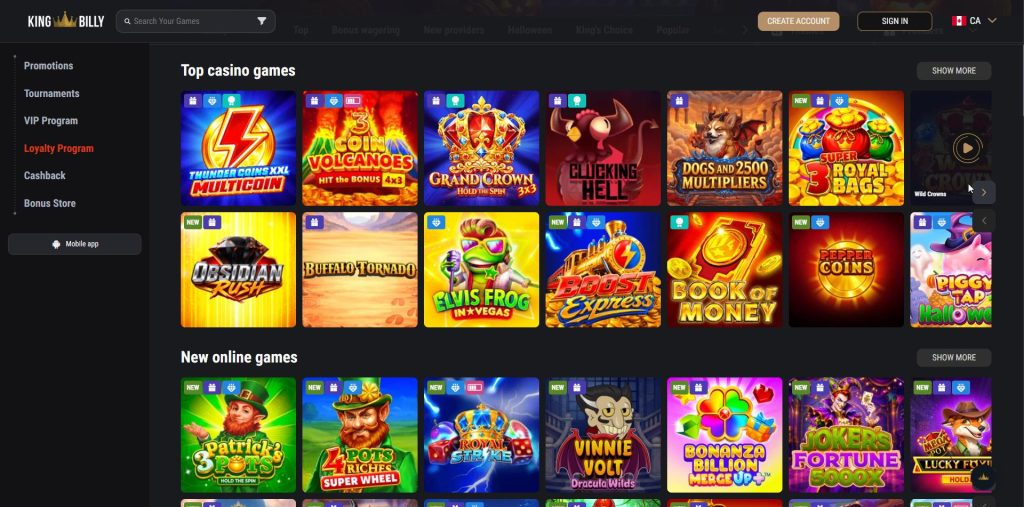
That price across fifty rounds brings the award to CAD 7.50. A 50x condition is printed, and one further record prints it too; CAD 75 is the cap set on a withdrawal. Elvis Frog Trueways is the machine, BGaming the credit behind it, FSBONUS50 the string. Seven lines come out filled here, and that happens nowhere else in the set. Being filled means each line carries something printed; it does not make those printed lines resolve into one another. CAD 7.50 for the award and CAD 75 as the cap share a page and nothing beyond it, since nothing printed there connects the two.
Monro, awarding one hundred rounds
The count here reads one hundred, a figure one other record also prints.
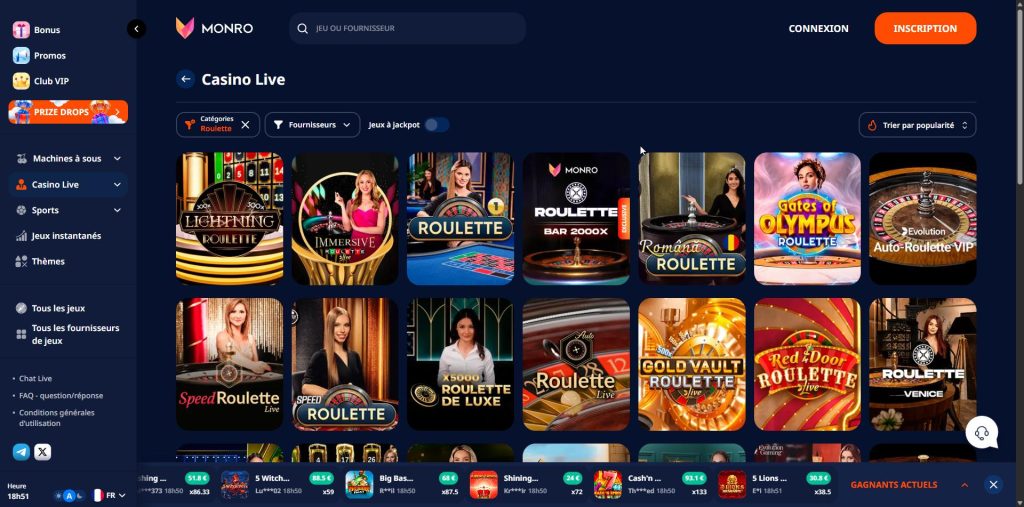
One round carries a price of CAD 0.15, taking the award to CAD 15.00, a figure two other records also arrive at from inputs of their own. As the condition, 45x is printed, carried by three entries in all. Savage Buffalo Spirit Megaways is the machine, the credit behind it reads BGaming, and FSBONUS100 is the published string. Ten times the bonus occupies the place a sum would hold as the cap, while the bonus itself appears as no sum anywhere on that page. Seven lines filled, one of them resolving to nothing. A record can print everything the tracking asks for and still leave a reader without a figure where the cap goes.
Hellspin, assigned the Lady Wolf Moon title
The machine at this record reads Lady Wolf Moon Megaways, and project data attach that same title to a brand standing outside these ten.

Credited behind that title is Booming Games, first of two records naming the studio. The count reads fifty and a round CAD 0.38, which brings the award to CAD 19.00. Figures carry the condition at the other nine; at this one it is carried in sentences, which is where it is left: no operator printed a numeric equivalent, so none is built, and it joins no scale the other nine sit on. The cap goes unwritten here, and so does the string. Five positions out of seven are filled, and the two that are not sit on different sides of the award: one governs what may leave, the other how entry is made.
Slots Gallery, entered through 30WW
Published at this record is the string 30WW, printed at no other entry here.

The count reads thirty, matched at two other entries. A 40x condition is printed, as it is at one further record, and CAD 150 caps a withdrawal here, which makes this the second entry carrying that figure. Wild West Trueways takes the rounds with Booming Games credited behind it, the studio’s second appearance here. One line holds nothing, the cost of a round, so an award value has no starting figure. Six filled, one unfilled.
Slotoro, with 5x printed as the condition
This is the one record out of ten documenting a 5x condition.
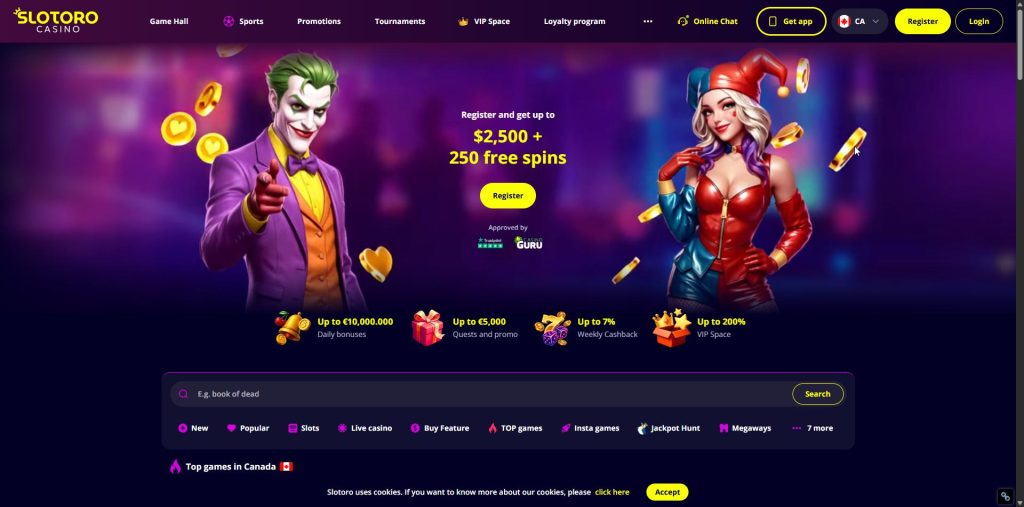
Fifty rounds, with one priced at CAD 0.30, come to CAD 15.00 for the award, the second record landing on that total. Gates of Olympus is the machine, and Pragmatic Play, credited behind it, appears nowhere else here. The cap is written as three times winnings; winnings stand on the page as no sum; so the cap produces nothing. The string line also holds nothing. Six lines hold something and one is bare.
Spinmills, credited to Hacksaw Gaming
Hacksaw Gaming takes the studio credit here, and takes it nowhere else among these records.

Behind that credit the title reads Le King, named nowhere else in these ten. Fifty is the count, a figure four other entries match, and 50x is the condition, printed at one further record. Entry runs through SPM50. Two lines are unwritten: what caps a withdrawal, and what a round costs, the second of which leaves the award unvalued. Two fields are matched by another row, and nothing crosses over on that account, since each row answers for itself. Five lines filled, two unwritten.
V.Vegas, where the recorded cap reads CAD 38
CAD 38 is what this record sets as the cap, and no other entry here prints it.

A 3x condition is printed, the only instance of that figure here. Fifty rounds at a price of CAD 0.30 each reach CAD 15.00, the third record in the set to land on that total. Book of Dead is the machine; Play’n GO stands credited behind it, and stands credited only here. The string line holds nothing, which is a report on this one page and decides nothing about strings elsewhere. Six of seven lines are filled.
WinBeatz, entered through UPLAY100
UPLAY100 is the string this record publishes, and nothing else in the set carries it.

One hundred rounds are credited, a count one other entry also prints, with 45x as the condition, second of the three records to print it. Six documented titles stand where a single machine would be named, and on the studio line the entry reads several documented studios. Both are held as project data write them, so neither singles out a machine nor puts one maker behind the rounds. What caps a withdrawal is unwritten, and so is a round’s price. Five of seven filled, and the entry sharing its count differs from this one on every line after it.
magic365, pricing a round at CAD 0.30
A round is priced here at CAD 0.30, which two further records in these ten also print.
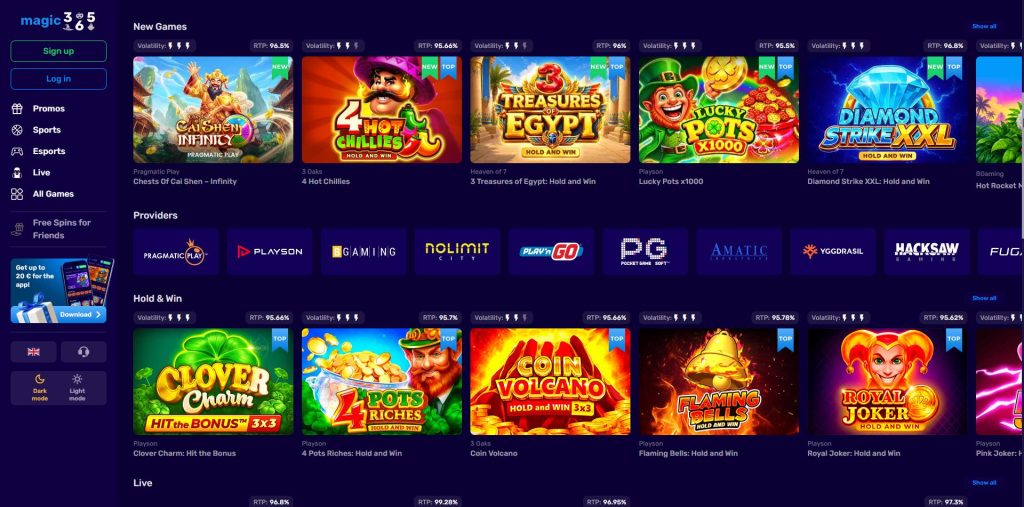
Thirty rounds at that price bring the award to CAD 9.00. CAD 8 is the recorded cap on a withdrawal, the only entry here recording one in single figures, and the condition reads 45x, third of the three. The assigned machine is Panda Fortune Rush. Nothing is held on the studio line or on the string line, so a machine is named without a maker, and activation is described in neither direction. Five lines carry a value; two do not.
Six columns laid across ten entries
| Brand | Play condition | Studio credited | Rounds awarded | Promo code | Withdrawal ceiling |
|---|---|---|---|---|---|
| Hellspin | stated in prose | Booming Games | 50 | no string published | cap line unwritten |
| Spinmills | 50x | Hacksaw Gaming | 50 | SPM50 | cap line unwritten |
| Jet4Bet | 40x | BGaming | 50 | BONUS50 | CAD 150 |
| Slotoro | 5x | Pragmatic Play | 50 | no string published | three times winnings |
| Monro | 45x | BGaming | 100 | FSBONUS100 | ten times the bonus |
| magic365 | 45x | studio line unwritten | 30 | no string published | CAD 8 |
| Slots Gallery | 40x | Booming Games | 30 | 30WW | CAD 150 |
| V.Vegas | 3x | Play’n GO | 50 | no string published | CAD 38 |
| King Billy | 50x | BGaming | 50 | FSBONUS50 | CAD 75 |
| WinBeatz | 45x | several documented studios | 100 | UPLAY100 | cap line unwritten |
Fifty cells make up the five variable columns and 42 of them carry a value: ten conditions, ten counts, nine credits, seven caps and six strings. One pass down the final column puts this article’s subject in front of the reader: a cap stands at seven entries, those seven print six distinct values between them, and the figure appearing twice is the CAD 150 at rows three and seven.
The studio column repays one pass as well. Rows three, five and nine carry BGaming, which is three of the nine records naming a studio, and those three agree on nothing else in the grid: 50x, 45x and 40x stand as their conditions; CAD 75, a bonus multiple and CAD 150 stand as their caps; fifty, one hundred and fifty stand as their counts; and a round carries a price at two of them, not at the third. A credit identifies whoever built a machine. The author of a promotion is not what it identifies, and on the terms printed beside it a credit is silent.
Round prices, game titles and expiry across the no deposit bonus set
Three columns laid across the same ten
| Brand | Assigned title | Validity | Price per round |
|---|---|---|---|
| Jet4Bet | Aloha King Elvis | no period recorded | price line unwritten |
| Spinmills | Le King | no period recorded | price line unwritten |
| WinBeatz | six documented titles | no period recorded | price line unwritten |
| Slots Gallery | Wild West Trueways | no period recorded | price line unwritten |
| Hellspin | Lady Wolf Moon Megaways | no period recorded | CAD 0.38 |
| King Billy | Elvis Frog Trueways | no period recorded | CAD 0.15 |
| Monro | Savage Buffalo Spirit Megaways | no period recorded | CAD 0.15 |
| Slotoro | Gates of Olympus | no period recorded | CAD 0.30 |
| V.Vegas | Book of Dead | no period recorded | CAD 0.30 |
| magic365 | Panda Fortune Rush | no period recorded | CAD 0.30 |
Of thirty variable cells, sixteen hold a value: six prices, ten titles, and not one validity period. All ten leave the middle column without an entry, a statement about the paperwork rather than a claim that an award never lapses.
Four rows hold a title and nothing else in the two columns beside it, and the pair sharing CAD 150 sits among them, at rows one and four. Pricing is unavailable at both, so neither award can be valued, which is the mechanical proof of what the cap column suggested: the single figure these ten repeat stands at the two records offering a reader the least.
Canadian rules that sit behind a no deposit bonus
Provinces hold the authority here, and three of their arrangements bear on how a promotion reads from Canada.
Rules each province writes for itself
A registered market has been running in Ontario since 4 April 2022 under AGCO supervision, and the counterparty a registered operator contracts against there is iGaming Ontario. Advertising a bonus publicly, or publicly promoting one, is closed to a registered operator there; inducements fall under the same closure, and so do gaming credits, so an Ontario reader encounters a different public page from a reader elsewhere. Alberta brought a second registered market in on 13 July 2026, run by the AGLC together with the Alberta iGaming Corporation. Other arrangements cover the remainder of the country, and a promotion that reaches a screen declares none of this about itself.
Approvals issued beyond Canadian borders
Dating from 1996, the Kahnawake Gaming Commission added an online framework three years later, within the Mohawk Territory of Kahnawà:ke. A permit is what it issues; a registration is what a province issues; and neither of the two performs the other’s function. A licence granted outside Canada works the same way, authorising whatever its issuer authorises and going no further. No authority of any kind is named at these ten records, so who stands behind an operator gets settled with that operator, and with whatever body it names for the purpose.
The youngest age a player may be
No threshold applies across the country as a whole. Three provinces put it at 18, those being Québec, Manitoba and Alberta, while 19 is the figure everywhere else.
Revenue treatment of a promotional win
Recreational play producing winnings is, as a general matter in Canada, not income for tax purposes, and that is where most readers sit.
That general position may fall away where play begins to look like a business run for profit. Anybody unsure which description fits their own circumstances puts the question to a tax professional, since a comparison of promotional terms is not the place to settle it. Tax goes unmentioned at all ten records, which is why the principle above is stated as the Canadian general one and not read off anybody’s page.
Reaching a human when a no deposit bonus stalls
With the terms set out and the rules behind them described, what remains for everything the pages miss is the desk itself.
How far the desk reaches is routinely overestimated. Three things fall inside it:
- one printed figure read in the context of a single account
- detail held at account level, which no comparison can get to
- the conduct of an operator at a step its own wording skips
Two things fall outside: rewriting what has been published, and supplying a quantity nobody printed. As for channels, opening hours and turnaround times, the ten record none, so how a desk is reached is as much an operator question as what it will answer.
Which no deposit bonus records qualified, and on what grounds
The database decided this, not judgment, and the deciding rules were settled before a single record was read. Six of them governed admission:
- seven fields read identically at each record, an unstated field left recorded as unstated and filled from no neighbour
- one entry only, taken wherever two rows carry nearly the same values
- never more than two records sitting behind one published string
- any row whose database status is unresolved left out
- no weighing by size, by appeal or by reputation
- an order of presentation taken off a recorded field instead of an opinion
Scoring, ranking and recommending play no part in what follows. Two of these records do agree on one figure; that agreement is reported, and nothing is read into it.
Setting your own boundaries before you start
A boundary is easier to set ahead of a first round than after a tenth, which is the reason this stands at the opening of a session rather than at its close. The list below names controls that are commonly available and does no more than name them; whether any one exists at a given operator gets settled within an account, and the ten records above carry nothing on the subject.
- time limits
- deposit limits
- session reminders
- time-outs
- self-exclusion
- play history
No single one of the six is put forward for an individual reader here, and none is said to exist at an individual site. Province by province is how Canadian support is organised, and its published points of contact are these:
- a directory, which the Responsible Gambling Council keeps
- ConnexOntario answers at the number 1-866-531-2600
- for Gambling Support BC the number given is 1-888-795-6111
- Alberta Health Services runs an Addiction Helpline, reached at 1-866-332-2322
- in Manitoba, the Addictions Help Line takes calls at 1-800-463-1554
- Saskatchewan’s Problem Gambling Help Line answers at 1-800-306-6789
Loose ends on the no deposit bonus
Does any cap figure appear twice in this set?
Yes, once. A cap is recorded at seven entries and the seven come to six values, so one figure stands at two of them while the other five each stand alone.
Which two entries share that figure?
Jet4Bet and Slots Gallery, both recording CAD 150. They also print 40x as the condition, making them the only pair here that agrees on two headline lines at once.
Can those two be set against each other on the value of the rounds?
No. What one round costs is printed by neither, so both awards stay unvalued and a money comparison has nothing to work from on either side.
How many of these awards can be converted into dollars?
Six do, so six awards can be stated in dollars. Four leave the line unwritten, and at those four no award figure exists.
Which studio holds the most credits here, and do those records agree elsewhere?
BGaming, which takes three of the nine studio credits here. Those three print 50x, 45x and 40x as conditions, Their caps read CAD 75, then a bonus multiple, then CAD 150.
How many separate play requirements are listed?
Six forms, spread across ten records: one condition in sentences rather than figures, then 3x once, 5x once, 50x twice, 40x twice and 45x at three records.
Which entries credit the heaviest round count?
Monro and WinBeatz. Fifty rounds go to six entries and thirty to two, which covers all ten and the three counts the set contains.
Is any cap written as something other than a sum?
Two of them. One multiplies the promotional value, the other multiplies winnings; with no sum printed for either quantity, neither cap yields a figure.
Does any entry record how long the rounds last?
Across the ten, no validity window is printed at all. An unfilled field there says nothing about rounds that never lapse, which leaves the operator holding the question.
Could a play-through total be calculated from this data?
No. A condition brings a printed factor with it; the quantity for that factor to act on is printed at no record; and importing one from outside would yield a total nobody published.
How young may somebody be and still take part, province to province?
The threshold is set at eighteen by Québec, by Manitoba and by Alberta. Nineteen is the figure in all remaining provinces and territories, and neither number is overridden by anything national.
Is a win here reportable to the revenue authority?
Recreational winnings are not, as a rule, treated as income by the Canadian revenue authority. A different rule covers play that has become a business pursued for profit.
Is registration with a province satisfied by an approval granted elsewhere?
No. An approval granted elsewhere, Kahnawake’s included, is an authorisation in its own right and performs none of the work a provincial registration performs.